

Envisioning Deep Democracy
How would life be lived in a participatory world?

On the libertarian left, political visions for the future emphasize the construction of a society built on participation and collaboration. Where every social institution, including housing complexes, schools and universities, workplaces, and political bureaucracies, is directly governed by its patrons. A society where the hierarchies of power are flipped on their head; governance driven by the exalted grassroots.
The term I’ve adopted for a society organized in this manner is ‘deep democracy,’ with political participation going beyond campaigns and elections. Where democracy is a daily practice of deliberation and collective governance.
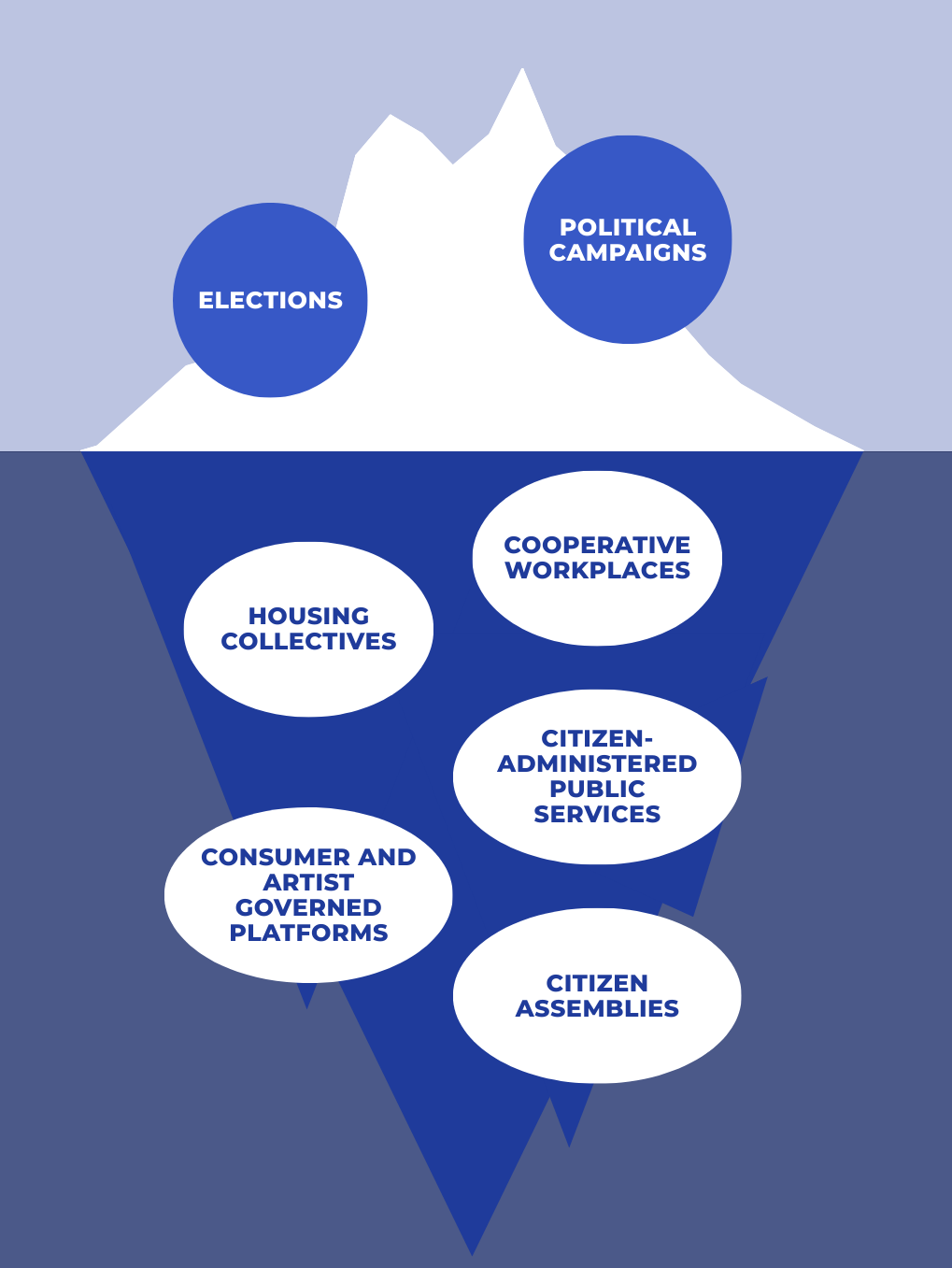
Much ink has been spilled exploring why deep democracy is desirable and how it may be achieved. Murray Bookchin, for example, argues in several of his works that decentralization personalizes relationships between individuals and the systems they interact with, promoting human flourishing (Bookchin, 1962). Alexis de Tocqueville, likewise, attributed American democratic culture to citizens’ associations, where individuals came together to directly pursue projects of civic import, serving to restrain overly individualistic sentiments from obstructing community needs (Tocqueville, 2002). Litigating these macro concerns, however, goes beyond the scope of this essay. My goal instead is to explore what it would be like to live in a deep democracy. What are daily rhythms like? How does the culture change under such a system?
A Bounty of Meetings
Governance requires meetings, lots of meetings. As decision-making processes expand to include more people, individuals will be invited to participate in more and more meetings. Instead of just attending town council and school board meetings, in a deep democracy, the civically minded would be obliged to attend meetings at their workplaces and apartment complexes, universities and utility cooperatives, grocery stores and daycares. Basically, anyone involved with an institution would be encouraged to take part in its management. Meetings to decide whether the town should invest in a new fleet of vehicles, whether one’s housing complex should renovate the gym, or whether one’s workplace should revise its product offerings. All decisions would be open to every stakeholder.
Critically, in a deep democracy, meetings would assume a distinct character when compared to community meetings under the current system of representative democracy. Contemporary town council, school board, and zoning council meetings serve two purposes: transparency and citizen input. The dynamic is still vertical, the elected and the electors, a stratified system of decision-making. Input doesn’t necessarily get put into practice, and if an elected body makes an unpopular decision citizens have to wait for an election to make their will known. In a deep democracy, meetings would take on a horizontal character, where citizen input possesses the same authority as an elected official. Public meetings would thus imbue the average person with the power to deliberate and decide.
Aside from meetings, other loci of participation will likely take up more of our time and attention. In a recent essay in Noema, James O’Sullivan imagines a world where our digital lives are governed not by the revenue-oriented policies of the top companies on the NASDAQ, but by decentralized mechanisms operated by users (O’Sullivan, 2025).
“Think credit unions for the social web that function as member-owned entities providing the infrastructure that individual users can’t maintain alone. These could offer shared moderation services that smaller instances can subscribe to, universally portable identity systems that let users move between platforms without losing their history, collective bargaining power for algorithm transparency and data rights, user data dividends for all, not just influencers (if platforms profit from our data, we should share in those profits), and algorithm choice interfaces that let users select from different recommender systems.”
Participation in many, if not most, social spheres would look less like attending a library board meeting once a quarter but would instead be an iterative process carried out through public forums, frequent polls, and the maintenance of communal infrastructure. This continual participation in the operation and direction of the systems of daily life would increasingly come to define how we schedule our time and how we socialize. Instead of passive observers bemoaning the decisions of managers or elected officials, day-to-day conversations would revolve around the actions people are taking to effect the change they wish to see. Imbuing individuals with real power to shape their day-to-day rhythms and the priorities of the institutions in which they exist would empower the citizenry to become active agents in civic life.
Of course, participation in these shared institutions would not be compulsory in a deep democracy. The civically minded would likely pick and choose which areas to dedicate their efforts. Maybe one person feels compelled to partake in the administration of city parks, whereas another would prefer to spend their time organizing a daycare center at their apartment complex.
The expansion of personal authority over and responsibility to one’s community would necessarily change the patterns of daily life. More people would spend their time attending public meetings and planning sessions with their neighbors. More people would be asked to serve on committees or serve an administrative function. Civic events would become a more common source of socialization, with relationships between neighbors and fellow citizens shaping one’s identity.
Cultures of collectivism
As governance shifts from adversarial to deliberative decision-making, wider changes to the general culture will inevitably shift as well. To understand why this is, it’s instructive to understand the dynamics of collaborative and consensus-driven community meetings.
In New England, the annual town meeting is a common form of direct democracy where every citizen gathers in a public place, debates the issues of the upcoming year, and votes on them in the style of a presidential caucus (Bryan, 2003). Groups can petition for items to be added to the agenda, and special sessions can be called if a specific plurality of the population petitions for it. While peaking during the colonial and revolutionary periods, this model still hangs on in many of the mountain villages of Vermont, New Hampshire, and Massachusetts.
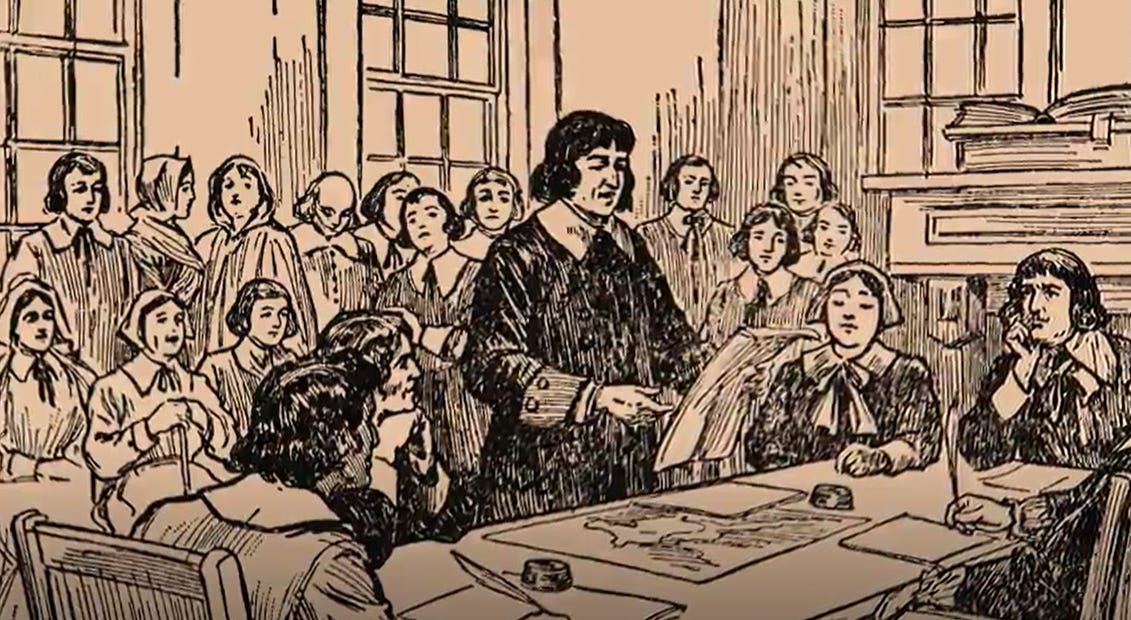
The culture of the town meeting seems to reinforce communitarian values by its very nature. By bringing the neighborhood into a room and hashing out the issues of the year together, you see your political opponents as people, and despite disagreements, the town meeting engenders a sense of common cause. Journalist Amy Crowford, writing about her own experience moving to a community governed by the town meeting, says (Crawford, 2013)
“The most controversial item on Westborough’s agenda was the school budget. The volunteer finance committee wanted to lower it roughly $200,000 below what the volunteer school committee requested . . . When the debate heated up, the finance committee chair urged us to remember, ‘In the end, we’re all part of the same town.’ The school committee’s budget passed, with 63 percent of the vote.”
With a focus on local bread and butter issues, the Town Meeting prioritizes togetherness, solidarity, and action. Social proximity incentivizes keeping discussions cordial, and knowing the people you disagree with are, by and large, normal people also trying to live their lives, it’s much easier to take their disagreement in good faith. The New England Town Meeting focuses on community cohesion and, through deliberation, finding solutions that best fit everyone’s needs.
A political system that prioritizes the collective good naturally shapes the culture around it. When one spends their evenings working with their neighbors planning the month’s apartment maintenance, collaboration becomes second nature. When a labor organizer visited the famous Mondragón workers cooperative in the Spanish Basque Country, she found that cooperation was a way of life. In observing cooperative members and the community at large, she found that individuals view community well-being as the responsibility of all, that one’s work is meant to improve society, and that cooperation is a daily practice (McGinty, 2020). Worker participation in day-to-day decisions is much higher in the region, even in non-cooperative workplaces. If a cooperative closes, another will try to absorb as many workers as possible, and cooperatives work to financially support one another during downturns (Whyte and Whyte, 1991). Finally, the work of cooperation is shared widely, with workers expected to take part in managerial decisions and study workplace issues carefully. In short, the workplace culture of a cooperative is one where solidarity and responsibility to one another are daily practices that permeate beyond the workplace.
This communitarian culture extends to other forms of highly participatory institutions. One former resident of a housing cooperative wrote in a blog post about how her life in a cooperative was surrounded by community (Jackson, 2015):
“There is always someone that you can call on to help if need be, whether it is my heating system won’t work and I have to call Dick, the maintenance chair, to come take a look, or I am not going to make it home in time for my son to get off the bus so I have to send him to my neighbor Linda to look after him until I get home.”
Broad participation in decision-making across life’s domains acts to increase one’s overall exposure to those in their community, driving greater affinity and rapport between people, laying the groundwork for greater levels of understanding, fellowship, and collaboration outside of governance activities.
Social Pressure and Incumbents
Of course, a communitarian social order comes with its own drawbacks, which could also further seep into the wider culture. One of these is the influence of social pressure. By moving politics from the private sphere of voting booths into the public forum, judgment and confrontation can modify the political actions of others.
The history of the New England Town Meeting illustrates this effect. In archived meeting minutes, individuals who voted against the will of the majority were often called out by name (Cossart and Felicetti, 2018). Many records emphasize cohesion in decision-making, framing resolutions as the ‘will of the town’ and failing to record the total ‘yay’ or ‘nay’ votes, downplaying the division that undoubtedly existed. It’s easy to see how these practices, bolstered by the Puritan culture of the time that emphasized the needs of the community over that of the individual, could make diverging from the norm taboo. Furthermore, the actual infrastructure of the town meeting could be hijacked to support nefarious ends. Seating was occasionally arranged to give privileged people a more commanding position within the meeting room, amplifying their opinions while relegating perceived opposition to the margins of discussion.
From these historic accounts, we can piece together a picture of how social pressure can become stifling in a deep democracy. Face-to-face conflict and negotiation are incredibly tiring, and when one feels that their community is against them, it can be easier to go along with the crowd, preemptively removing opposition. Even when it doesn’t feel like one’s community is categorically against you, publicly disagreeing with one’s mother-in-law, husband, or manager has its own layers of social pressure. The laborious work of conflict and navigating intricate social dynamics can make deep democracy an incredibly tiring endeavor, even for the most impassioned and engaged. In periods of protracted tension, governance can become an intense source of stress and hardship.
Finally, deep democracy could end up feeling like rule by the most impassioned, best resourced, or even the bored. A deep democracy necessarily requires more time for study, discussion, and decision-making for the ordinary citizen when compared to a representative democracy. This raises the barrier to participation, potentially filtering out all but the most engaged citizens. There is some evidence that this currently happens, with a study of zoning board meeting minutes finding that older male homeowners are over-represented in participation records (Einstein et al., 2019). Additionally, attendance rates of registered voters in contemporary New England Town Meetings are stunningly low, even compared to municipal elections (Rolheiser and Saiz, 2020). The greater barriers to participation inherent in a deep democracy are likely to shape political participation in key ways, bifurcating the culture between the civically engaged and disengaged. Cultural animosity could come from this bifurcation, and taboos surrounding non-participation would likely become a major source of animosity and conflict in a deep democracy.
Closing Thoughts
The project to realize a deep democracy has a long road ahead before any of these cultural shifts can be seen. However, I wanted to touch on a few cultural preconditions I see as essential to help lay the groundwork for a more democratic future.
The first is to rebuild a society based on broad social trust. Deep democracy requires groups to deliberate, come to a decision, and implement that decision together. Such involvement requires that everyone believes all participants are acting in good faith and that others can be trusted to tell the truth and complete tasks and duties, even if they didn’t fully agree with the premise or decision. With social divisions the most inflamed in recent memory, it can be difficult to imagine folks being able to trust strangers enough for a deep democracy to be widely palatable. However, a pathway is present. Increasing participation in civic and political life and making institutions (churches, workplaces, community organizations) more functional are key strategies to boost social trust (Mindel, 2025). While it may seem that social trust would be more tightly associated with homogeneous and tightly knit cultures, like the Anglo Puritans who created the Town Meeting, such groups tend to have lower rates of trusting others, particularly outsiders (Enke, 2017). Given that social trust is built by interactions with out-groups, community meetings within a deep democracy by their very nature would likely increase general social trust (Helliwell et al., 2014; Chakraborty et al., 2024). A positive feedback loop that is baked into models of deep democracy.
The development of a robust intellectual life is another precondition for a functional deep democracy. Having a populace that can study issues thoroughly and reason critically is important if decision-making powers are to be expanded more broadly. Access to quality informational materials, a forum to respectfully discuss them with others, and a culture that rewards intellectual pursuits should be emphasized in building a democratic culture. In his seminal The Intellectual Life of the British Working Classes, historian Johnathan Rose recounts how the freshly literate working class in Britain’s cities assembled workers’ libraries and held public lectures and discussion groups focused not only on the issues of the day, but on pursuits of literature and religion (Rose, 2021). Rebuilding a culture that values learning and a society that provides opportunities to engage in new ideas in a stimulating and congenial environment to all citizens (regardless of their level of educational attainment) are critical to laying the groundwork for a deep democracy.
As with anything, these shifts will take time to implement. However, they are not a second fiddle to winning structural reforms but are, in fact, core to the project of broader political participation.
“Politics is downstream from culture” is a popular maxim, but it seems fair enough to say that our political systems shape culture as well. A deep democracy, however far away such a vision may seem, holds incredible promise for realizing a hopeful vision where human potential is not only valued but nourished. The world described above, despite its flaws, is a haven within our grasp. We have the power to create a world where engaged democracy is at the core of our cultural DNA.
Further reading about the Mondragón cooperative

What I’m Reading, Watching, and Listening to
What Fantasy Gets Wrong About Sacred Groves: A scholar of religion compares the fantasy genres depiction of sacred groves to how they are actually conceived of and utilized in real world religions. Includes some fascinating details on the environmental value of said groves.
This Brooklyn bagel shop is saving money with plug-in batteries: Distributed batteries in homes and small businesses -- attached to appliances and other devices -- will become an increasingly important component in our grid and for consumers.
Roast Camel for the Suburbs: A fascinating dive into the ways ‘rural life’ YouTube channels are shaping the economies of the villages where they shoot, and how these channels largely American-audience shapes the way foreign cultures are portrayed to meet the demands of the algorithm.
Hey, remember me? The camphost that summer.
I appreciated this a lot, especially the attempt to describe what life would feel like under deep democracy, not just how it would be structured. The sections on exhaustion, social pressure, and the risk of rule by the most engaged felt unusually honest for this kind of piece.
One thing I kept thinking about, though, is how uneven the cost of participation can be. In my own experience, highly deliberative and “horizontal” spaces can be energizing for some people and quietly draining or coercive for others, especially for people who come in with prior experiences of moralized participation or group pressure.
You touch on this with social pressure and incumbents, but I’m curious how you imagine a deep democracy protecting not just dissent, but the legitimacy of opting out, without non-participation turning into something culturally suspect.
Not meant as a challenge so much as a real question. This feels like one of the harder seams where culture and governance rub up against lived experience.