

On the Lonliness of Travel

During my college years, I had a number of wonderful opportunities to travel. Between internships and study abroads in China, Germany, and Rome, I was able to engage in a plethora of cultural exchange, scientific training, and professional development experiences. In fact, past the sedimentary layers of science communication and social commentary, this blog's first incarnation was as a travel journal I launched during my internship in China.


In addition to my own travel, I've had many friends and acquaintances also engage in extended travel opportunities during and after college. What has always struck me when talking to them about these trips is that they always came out of it with more long-term friendships than me, as well as more stories of adventures with locals than I ever had.
When comparing my own experiences with those of my peers I often felt a mix of jealousy and dissatisfaction. Throughout my travels, I never made the deep connections that one is supposed to make. I don't have any friends from my visits I correspond with regularly, nor do I have anyone to reunite with if I returned to the places I’ve lived. To me, one of the main points of extended travel is to form meaningful and lasting bonds with individuals in different countries. To promote one’s actualization as well as to serve as a conduit for global awareness and cultural diversity. And the only way to accomplish these lofty goals is by forming close friendships. That’s just never something that worked out for me.
In China, I lived with my boss and her husband, only sharing a common language with my boss. I also worked with several Chinese grad students who trained and oversaw me as I carried out experiments for my project. We also ate meals together and hung out during breaks. While I had lots of contact with these folks, the language barrier made deeper connections more difficult to find. At meals, I was the only non-Chinese speaker, and some members of the lab didn't speak English. As such, I felt a bit rude when I inserted myself into the conversation too much, as I didn't want to freeze anyone else out from the conversation. I generally avoided imposing myself on folks, as I felt that doing so would be disrespectful as a guest. Furthermore, my friends’ status as busy grad students meant they had little free time to join me on weekend excursions, so most of my trips to assorted attractions were solo. I occasionally met up with other interns in the city (working at different institutions), but they were often busy with their own engagements.
In Germany, I experienced similar circumstances. At the University of Hohenheim, I lived alone at a guesthouse for visiting scholars so I didn't have anyone I could hang out with in the evening. The center where I worked had a few students a tad older than me, but they were often out in the field or in the lab, away from the offices where I was relegated. The projects I was assigned to were managed by senior scientists who weren't my age and had kids to go home to after work. While communication was easier (my German is far better than my Mandarin), it wasn't a situation where I could cut loose and form close friendships.
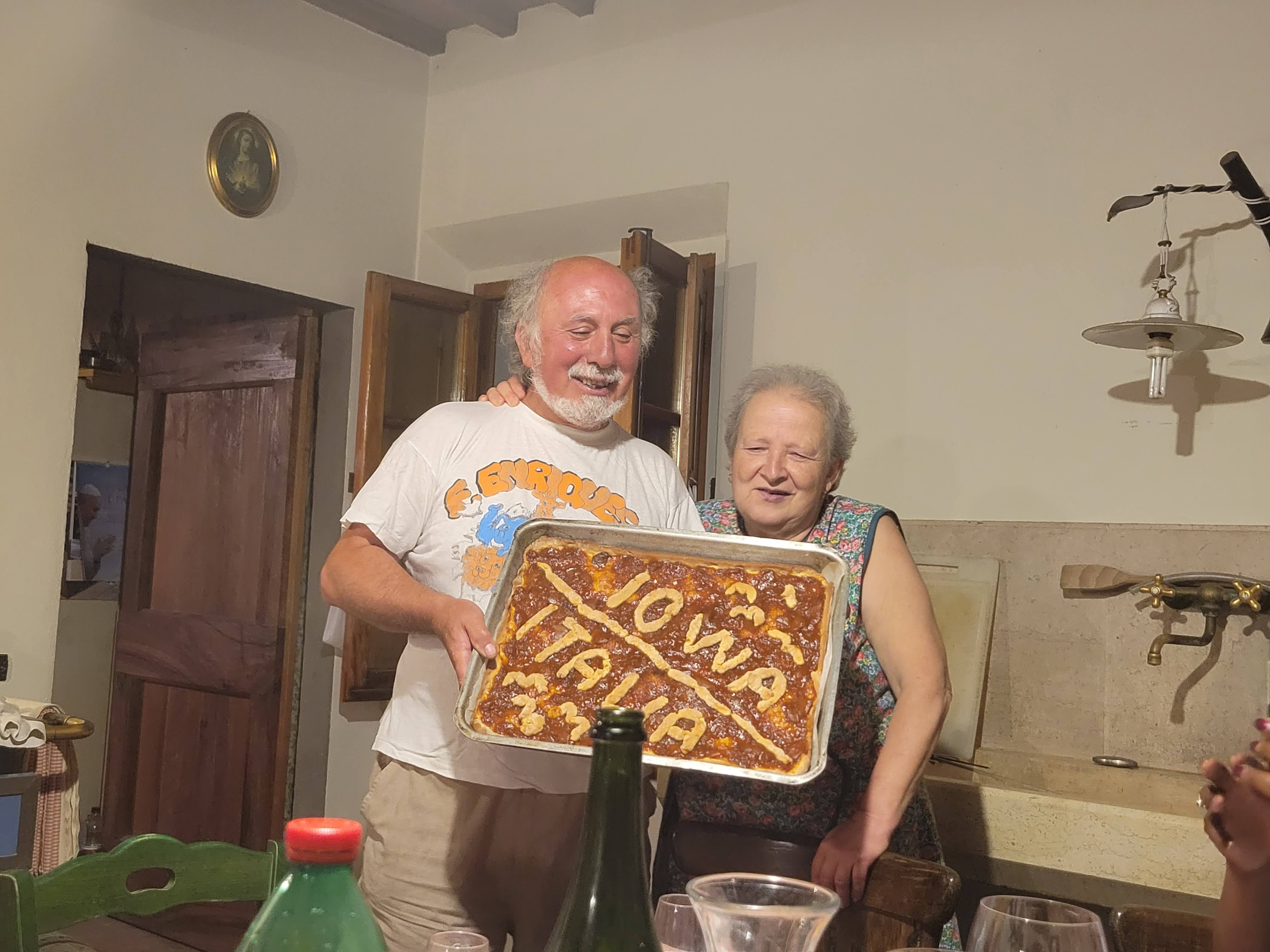
My Rome experience was a little different than these other two. This trip included 7 other Iowa State students my age along with two professors. Among my three extended trips, this was by far my most social. But because I already had a lot of friends I never really felt pushed to branch out and try to get to know others in the city. An exception to this was when the university organized a trip up to Tuscany where we stayed with a local guide who took us on tours of local farms, an olive mill, and a winery. This trip, which also included a home-cooked meal with a local family, provided a structure where real cultural exchange could occur.
There are several causes, internal and external, that overarched these experiences and prevented me from forming deeper connections with others. First and foremost, I am an introvert. I get flustered when conversing with strangers, and lots of socializing wears me out quickly, especially if there is no structure that mediates the occasion (such as a tour or class). Coupled with the persistent exhaustion that comes with long flights, culture shock, and being uprooted from familiar routines, I often found myself needing lots of rest time. This caused additional anguish over whether I was wasting my limited time, compounding my exhaustion. I was also quite self-conscious about inconveniencing my hosts and coworkers in the places I visited. They were all busy people living their everyday lives, and I always worried about being a disruption. Finally, (this point was raised by a friend of mine who lived in a city with a transient population) when people know you're going to move away soon, they are more reticent to try and get to know you on a deeper level. Put in the cold language of economics, the return on investment is quite low from their point of view, since the time they invest in getting to know you will only pay dividends for a few months.
Looking back on my preparations for China, I think I expected that I would experience a personal renaissance of sorts over the course of the trip. Those earnest friendships and transformational adventures would come easy. That I would become a new person thanks to the sanctifying virtues of travel. That is how travel seemed to work for my peers.
Unfortunately, I simply am not that person. It takes me a long time to become acclimated to a new city. When I moved to Missouri, it took me a month before I met my first friend, and the only reason I had a friend group by my second semester is because I was adopted by an extrovert and brought into her circle. I am hyper-conscious of social mores and ever fearful of being an imposition. It takes time for me to become comfortable around strangers, to marinate in a new place before I feel comfortable navigating it. The timeframe of short international exchanges is simply too brief for me to properly gain my footing.
Of course, I do not labor under the delusion that these are immutable facts about my personality. I have experienced plasticity in these traits, and if I were to undertake a similar experience today, I would fare better in handling these issues. However, I think one of my main takeaways from this reflection is accepting that travel is not inherently a life-changing experience. Anxieties, hang-ups, and other hindrances are not screened out at customs. For future travels, I need to play to my strengths, understand how I make connections and socialize, and work at seeking those occasions instead of hoping that they will suddenly come naturally.
As I’ve reflected on these experiences, I’ve been able to better contextualize the value one receives from travel. While I still maintain that visiting other countries is a valuable route for personal enrichment, results will vary depending on personality. For some, like me, shorter trips are often too limited in terms of time and space to establish the bonds that others are better equipped to create.
As I’ve spent more time stationary in the past few years, I’ve come to value the quiet calmness of standing still. For a time, I wanted to be a globetrotting cosmopolitan, exuding anecdotes of my adventures during my brief forays stateside. But as I’ve learned more about myself and come to accept my lack of constitution for the nomadic life, I’m more comfortable becoming deeply rooted in my locality. I am still eternally grateful for these experiences. The skills and perspectives I gained while abroad have defined my personal and professional trajectories since returning to the U.S. If the opportunity presents itself, I may blaze a new trail into the wider world. But I’ll do so with a better understanding of how to make travel work for me.
What I’m Reading, Watching, and Listening to
Reviving the Old Bay: An incredible assessment of the efforts to restore the ecology of the Chesapeake Bay, including some amazing efforts to improve regional fertilizer practices.
Can I Grow 100 Year Old Tomato Seeds?: Youtuber discovers seed from a lost variety, attempts to revive it.