

Perennial Pasts
The power of perennials to safeguard the future

From its origins, nearly all of human agriculture has been an annual endeavor. Annual monocultures of grains and legumes require soil disturbance, which ultimately leads to erosion and vulnerability to environmental stressors. More fundamentally, however, annual systems of production, operated on short-term time scales, have shaped an agriculture engineered for the short term. With prodigious rates of soil erosion and petrochemical use, the way we farm today has no plan for ensuring food production past 2100.
The remedy for this problem may lie in transforming agriculture into a perennial endeavor.
Definitionally, perennials function across long-time scales. These plants have developed traits that are fine-tuned for conditions under limited water, extreme temperatures, and natural disasters. Their deep, robust root networks build organic matter (critical for healthy soils), capture and retain nutrients, and draw water from deeper in the Earth. These activities are essential to resilience under stressful conditions, making perennial plants on average better than annuals at handling environmental stress. Perennial crops are still impacted negatively by a changing climate, but they are much more readily equipped to keep producing food in a worsening world.
While there are contemporary efforts in designing new and novel perennial cropping systems, many cultures across the world have stewarded forests and fields of perennial food for millennia. Nut trees in particular have been a focal point across cultures. The ability of trees to provision food for decades has allowed traditional cultures to design and manage food systems on generational time frames, a long view that modern agriculture desperately needs.
Italian Chestnuts
Across the Mediterranean, from Iberia to Anatolia, lives a species of tree often overlooked in the modern day but was central to the lives of Italians, Corsicans, Turks, Greeks, Spaniards, and many others. The European chestnut, Castanea sativa. Today, chestnuts are a quaint specialty food mainly associated with Christmas fireplaces. Historically, however, they served a critical role in the foodways of the Mediterranean. By documenting the role chestnuts and nut trees in general played in traditional food systems, we can better understand the power behind perennial plants and their ability to help us design our landscapes for resilience and future generations.
Chestnuts are prolific producers of carbohydrates. Unlike most nut species, chestnuts could replace grains or potatoes as the caloric base of one’s diet. However, unlike these staple foods, chestnuts are perennial. Once established, you do not need to put much labor into food production to continue, securing a long-term resource base for you, your family, and your community. Optimizing chestnut cultivation requires management such as fertilization, pest control, and pruning. But absent such efforts, a family maintaining a small chestnut stand can still produce enough calories to fulfill a sizable portion of their needs.
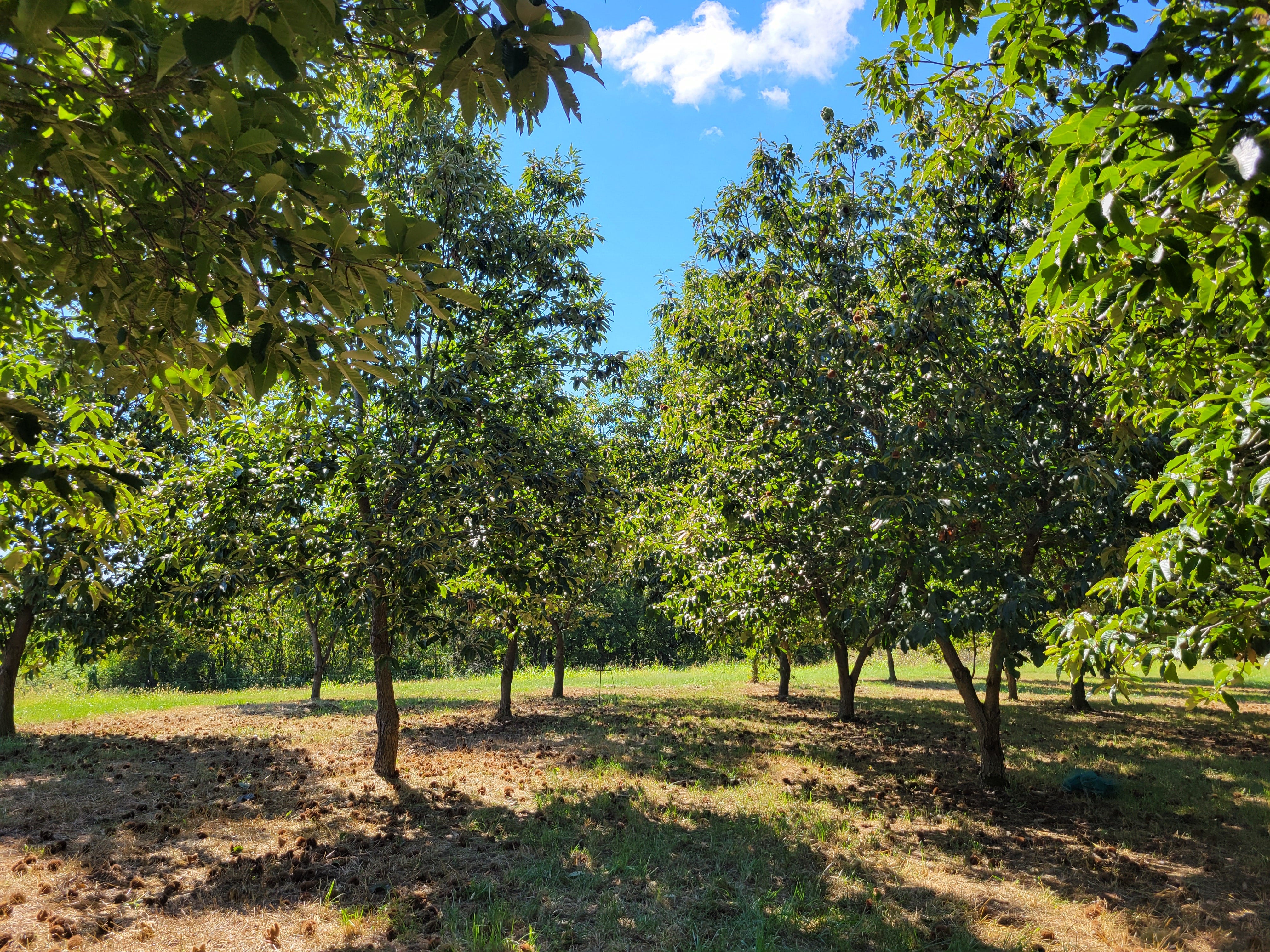
Chestnuts were particularly important in medieval Italy, where their perennial nature provided an important complement to the wheat-based agriculture that dominated food production. When utilizing low-intensive management strategies, chestnut production can be labor-saving compared to annual grain crops. While it takes a lot of energy to establish trees, including watering seedlings and clearing weeds, they can bear fruit with little additional labor input once they grow past the juvenile stage. Compared to the backbreaking labor of tilling, tending, and harvesting a wheat crop year after year, once the trees were established there was comparatively little work involved in producing food. The relatively low labor needed to manage mature trees meant that chestnut groves could be a food source, particularly during worker shortages brought on by war or famine.
Chestnuts are also reliable trees. Unlike some other nut trees, they produce a sizable crop every year. While subject to ebbs and flows in productivity like any other crop, the year-to-year output was far more consistent than grain in the Middle Ages. Additionally, chestnuts were divorced from some of the meteorological events that can strike down an otherwise successful wheat crop. A summer drought hitting earlier than usual could decimate grain set in wheat but hardly affect the productivity of the chestnut. This reputation for consistent yield placed chestnuts as a central role in the insurance scheme that was medieval crop diversification.
Finally, chestnuts have a multitude of uses. These include lumber for construction and firewood for warmth. A common use in wine-loving Italy was as props to support grapevines. Moreover, the grass grown in the shadow of these handsome trees could be grazed or hayed to support livestock for meat and milk. This sets chestnuts apart from other crops, which only provide food, straw, and post-harvest grazing land. This variety of potential uses diversified the set of future possibilities for the planter and increased the value of chestnut stands for a family.
Combined these three characteristics made chestnuts an incredibly attractive tree for Italian peasants. And in some manner, each of these characteristics is rooted in perenniality. Labor savings were had from the lack of effort needed to expend towards planting, its reliability came from its stronger rooting system making resource acquisition more effective, and its multitude of uses came from the trees’ ability to provision wood and other services while also growing food. Combined, these qualities made chestnuts a crop synonymous with resilience. When the wheat crop failed, one always had a sizable harvest in the orchard. When a cold winter struck, one could dip into your living firewood reserve. When sickness or war appropriated one’s labor force, they could always fall back on the chestnut grove. The proliferation of chestnut orchards across medieval Italy imbued personal and community resilience onto the landscape itself.
For individual Italians planting chestnuts was an act of love and care, an incredible exertion of a person's labor and resources, and an investment made primarily for future generations. It takes years for chestnuts to begin producing and decades to reach their maximum yields. Those who took the time to plant these woodlands and maintain them through their infancy did so not for themselves, but for their descendants. Because of their long-term nature, chestnuts became an essential tool for serfs in planning for the future.
Chestnut stands acted as a critical inheritance strategy for the more vulnerable members of a family. Due to the culture of the time inheriting an orchard was more advantageous for women, who often did not engage in field labor. The lack of labor and reliability of a chestnut stand allowed women to support themselves economically, providing them agency after the passing of their father or husband and an asset that could be leveraged towards their economic improvement. Since there was no need for daily toil like in a wheat field, women as well as the elderly could feed themselves and earn an income, benefits they would not be able to realize if given a field or a pasture.
Chestnuts were also used to solidify tenure over land. Under feudalism, peasants had few avenues to expand holdings and had to make significant contributions of food and labor to local lords or churches for the right to farm. Temporary arrangements could be made with the landed elites; however, these agreements were ephemeral. A peasant could spend 20 years working a piece of land, improving soil quality and building roads and barns, only for the lord to end their agreement and retake possession. However, under the legal regime of the day, if one established a thicket of trees, they had the right to access and utilize those trees throughout their lifespan. This practice effectively guaranteed centuries of access to and management over tracts of land for an individual and their descendants when there were few such opportunities. Trees and their perenniality ensured peasants had a way to assert control over land and unlock new strategies for economic improvement for those least legally empowered to access it.
Mississippi Pecans
The humble pecan was another nut species whose labor-saving characteristics supported multiple civilizations. Best known today for adorning the tops of Thanksgiving pies, this lowland species was a critical component of native foodways along the lower Mississippi basin. Tribes in this region were semi-sedentary – they farmed corn, beans, and squash in the summer and switched to a hunter-gatherer lifestyle in the winter. This shift was perfectly timed with pecan season.
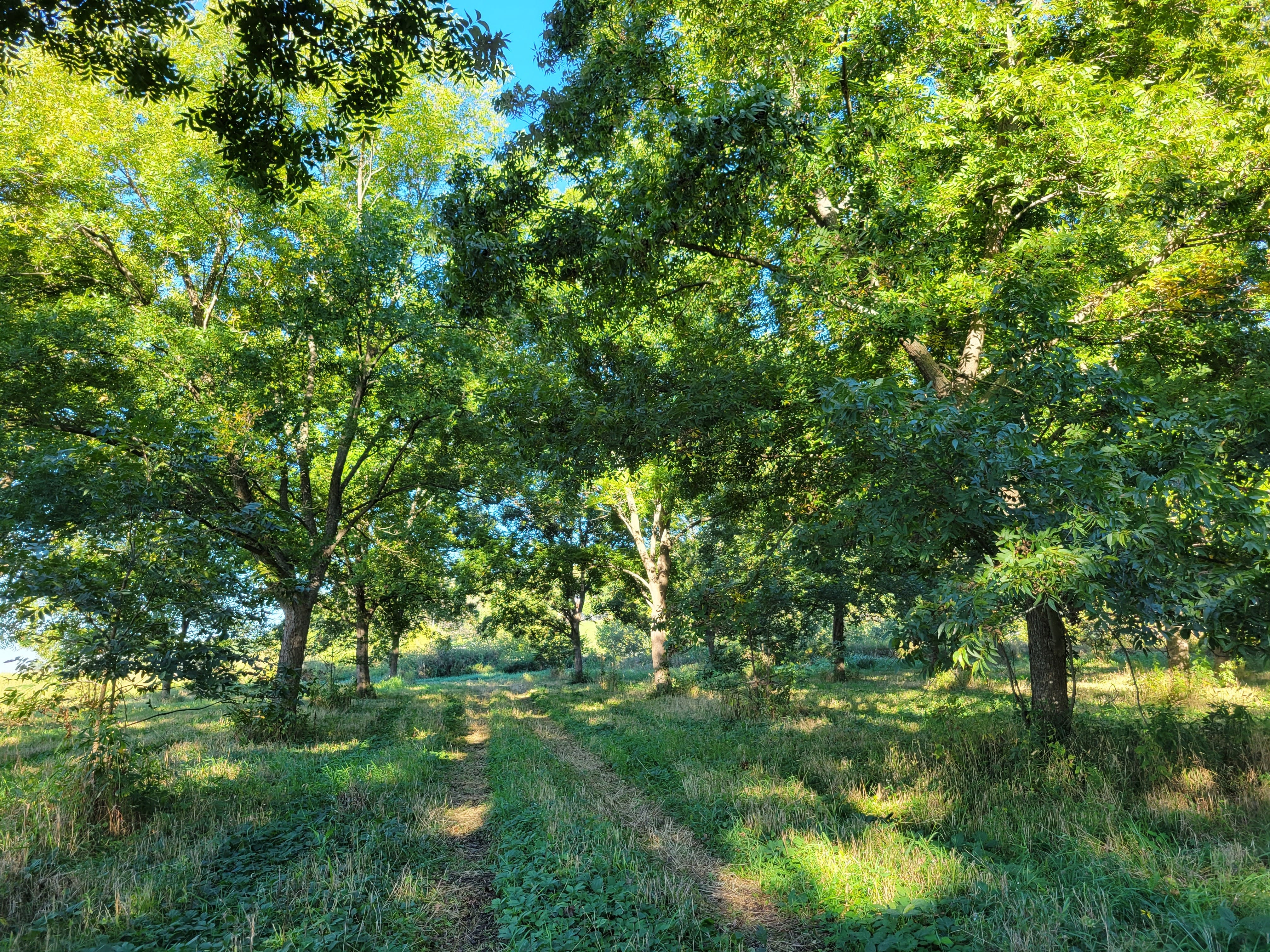
Unlike chestnuts, pecans are an alternate-bearing species. In what is theorized to be a strategy to outcompete foragers such as squirrels, the trees occasionally muster their collective forces to produce a surge of nuts. This strategy overwhelms wildlife, allowing for a healthy number of seedlings to be established. However, this erratic production means that pecans are much less reliable sources of food for sedentary agriculture, at least until the advent of modern management methods. Thus, natives focused their agricultural activities on more reliable annual crops and consigned themselves to orienting their winter foraging routes around when different pecan groves were known to fruit.
In her seminal essay collection Braiding Sweetgrass, Robin Wall-Kimmerer tells the story of her grandfather, forced to Oklahoma by the federal government, who was a skilled collector of pecans. Despite being removed from their Neshnabé (Potawatomi) homelands, his tribe quickly recognized the low-labor food source their distant kin spent many abundant winters feasting on. In those days, the government's program of colonization included the seizure of Indian children in exchange for access to rations, and it was these bumper crops that sometimes helped a family stay together. "Maybe it was a good pecan year that staved off the agents for one more season. The threat of being sent away would surely make a small boy run home half-naked, his pants stuffed with food. Maybe it was a low year for pecans when the Indian agent came again, looking for skinny brown kids who had no prospect of supper—maybe that was the year Grammy signed the papers." Once again, perenniality gave this community flexibility while navigating catastrophe.
California Oaks
The native peoples of California constructed a similar economy around the harvest of wild acorns. Unlike chestnuts or pecans, a wide range of oak species populate California's forests and savannas. This diversity was critical to the food security of these peoples; if one species failed to produce one year, another would still put out acorns. This pattern supported a food system built from alternative-bearing tree species, as one species producing a bumper crop can make up for other species having a sparse year. Even when these cycles lined up and few nuts fell, trade between tribes would get a community through the winter.
Oaks were managed for foraging. Even with multi-generational management, there is a limit as to when direct cultivation becomes uneconomical. Oaks are incredibly slow growing – it takes the black oak (Quercus kelloggii) 30 years to even begin putting on nuts, and full production isn't seen until the 175-year mark. Investing labor and time is less attractive once an investment won't be due past your grandchildren's lifetime.
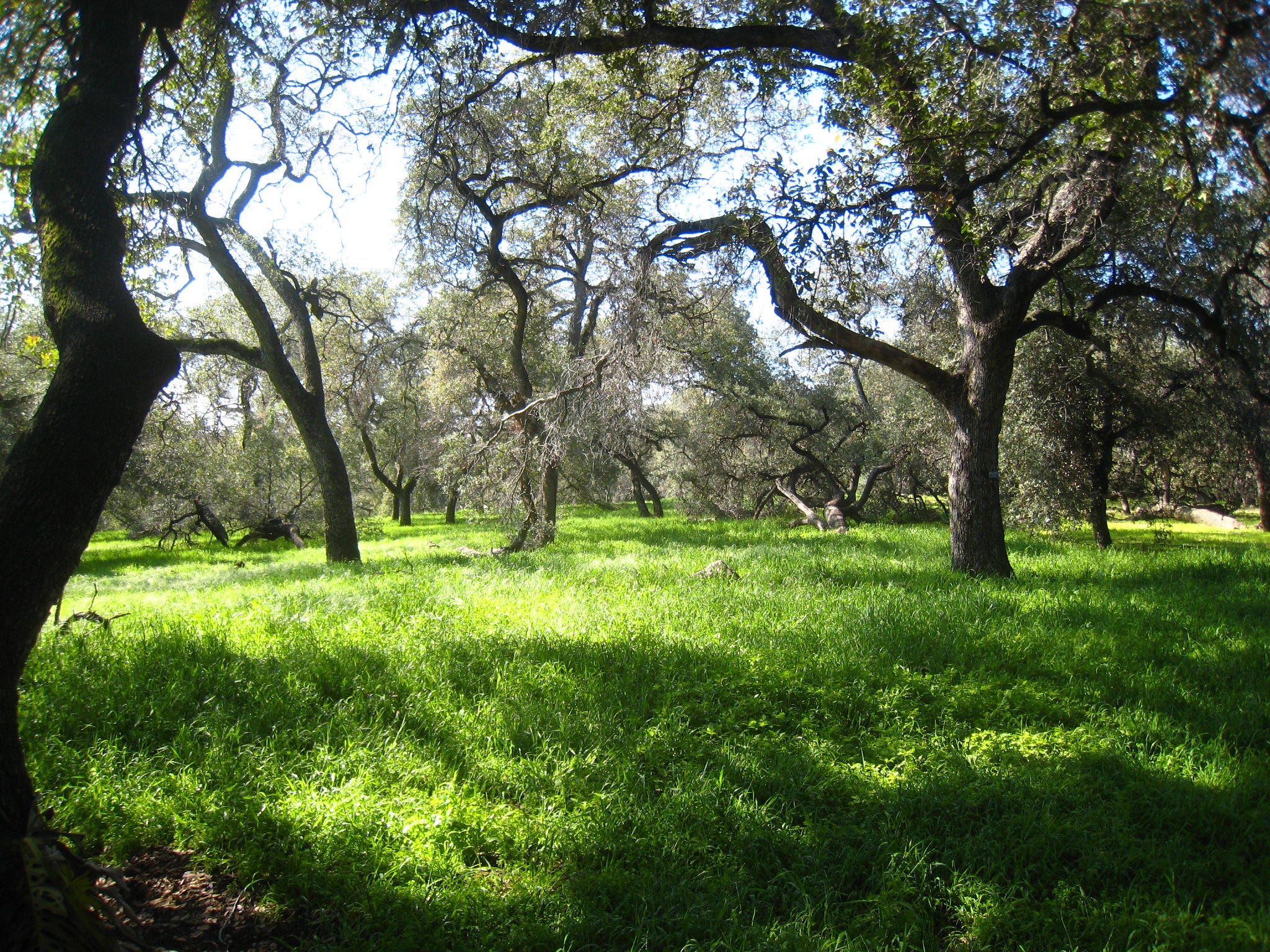
This is not to say that native Californians failed to manage this resource. Several strategies were employed to improve the productivity and health of oak ecosystems. The knocking of branches to release acorns come harvest is one such strategy. While at first glance this practice may seem to damage the plant, and it does cause immature acorns to fall off the tree early, it's beneficial to both the people and the tree. Oak trees don't produce ripe acorns all at once. It takes weeks or even months between the start and end of the dropping season. By knocking acorns out of the tree, native peoples could conduct their harvest all at once and claim the bulk of the output before the birds and squirrels. Additionally, the beating of the branches acted as a form of pruning, knocking off dead and diseased limbs and allowing the tree to focus its energy on growing new and healthy branches. Over time, this harvest strategy resulted in more vigorous stands.
Fire was another management tool employed by native Californians. Oaks are a fire-adapted species. Their leaves are designed to promote fire, as they dry out quickly, and their shape helps spread a flame rapidly to other kindling. Fire creates and maintains oak ecosystems by clearing out the understory and preventing faster-growing trees from outcompeting oak saplings, freeing up light and water for the young trees. These low-intensity fires also prevent brush buildup that, if left unchecked, would ignite into high-intensity fires that kill oaks. Native people burned woodlands to clear out this understory and eliminate worms and weevils that infect oak trees. Fire kills their eggs and makes the oak stronger.
Indigenously managed California was lauded as one of the most densely populated areas in North America due to the abundance provisioned in part by these oak woodlands and savannas. The generations of care, along with centuries-long lifespan of Californian oaks, is what created this cornucopia of a land.
As we re-imagine our food system and devise solutions to ecologically and equitably to feed a planet of 11 billion, following the path dependency of annual monocultures will not be enough. Their resource intensity and soil erosion drive the degradation of land and water. Exploring perennial crops and designing systems around them can help us unlock an agriculture that invests in the future while sustaining the present. Perennials are structurally resilient, offering new possibilities for what out future food system can look like. The lesson gleaned from studying the nut cultures of the world, be it a chestnut-planting Italian peasant or an oak-burning Native Californian, is that perennial plants offer an investment for generations to come.
Whether it’s re-configuring production models of yesterday or searching for more abstract inspiration, perennials promise new opportunities for us to augment and transform contemporary agriculture to save our soil, clean up our land, build relationships with our ecosystems, and feed the future.
I invite you to read the following books that formed the basis of each of these sections. For the chestnut section Landscape and Change in Early Medieval Italy: Chestnuts, Economy, and Culture by Paolo Squatriti is an excellent exploration into the evolution of chestnut cropping systems on the peninsula. For the pecan section, John McWilliams The Pecan: A History of America’s Native Nut and Robin Wall-Kimmerer’s Braiding Sweetgrass (Council of Pecans chapter) are both excellent accounts of the history of this enigmatic nut. Finally, for the California oaks section, Helen McCarthy’s chapter titled Managing Oaks and the Acorn Crop published in the book Before the Wilderness: Environmental Management by Native Californians is a fascinating dive into the management practices and cultural importance of oaks for native Californians.
What I’m Reading, Watching, and Listening too
Be Thankful for Local News Reporters: A celebration of Iowa’s hard-nosed reporters keeping coverage alive in small towns, with a cameo from a former high school classmate of mine!
Street View: The folks at The Pudding put together a dataset of 8 million street view images in NYC and extracted the text from each of them. This impressive visual essay explores the unique local vernacular, the geographic distribution of different words, and what different terms, logos, and brands are unique to the city.