


The Golden Age of Civil Society
Monti, Iowa, is a hamlet along Buffalo Creek, anchored by St. Patrick’s Catholic Church and the attached community center. An enclave of Irish immigrants dug out of the prairie by a cadre of hardscrabble farmers (including my great-great-great-grandfather), this tiny parish followed the trajectory of many tiny towns in rural America. Its population peaked at 110 in 1902. In 1966, the school closed down. In 1987, for the first time, deaths outpaced baptisms. By 1994, the church at Monti officially lost their full time priest, with congregation records asserting “the priest shortage was now not something that the parish talked about, it was now something that the parish experienced” (Adams et al., 2005). The town was built around the church. And after seeing the coming and going of the post office, the railroad, the creamery, and the bank, Monti was now seeing its shepherd leaving for new pastures.1 Nowadays, Mass is said once a year during the town’s reunion.
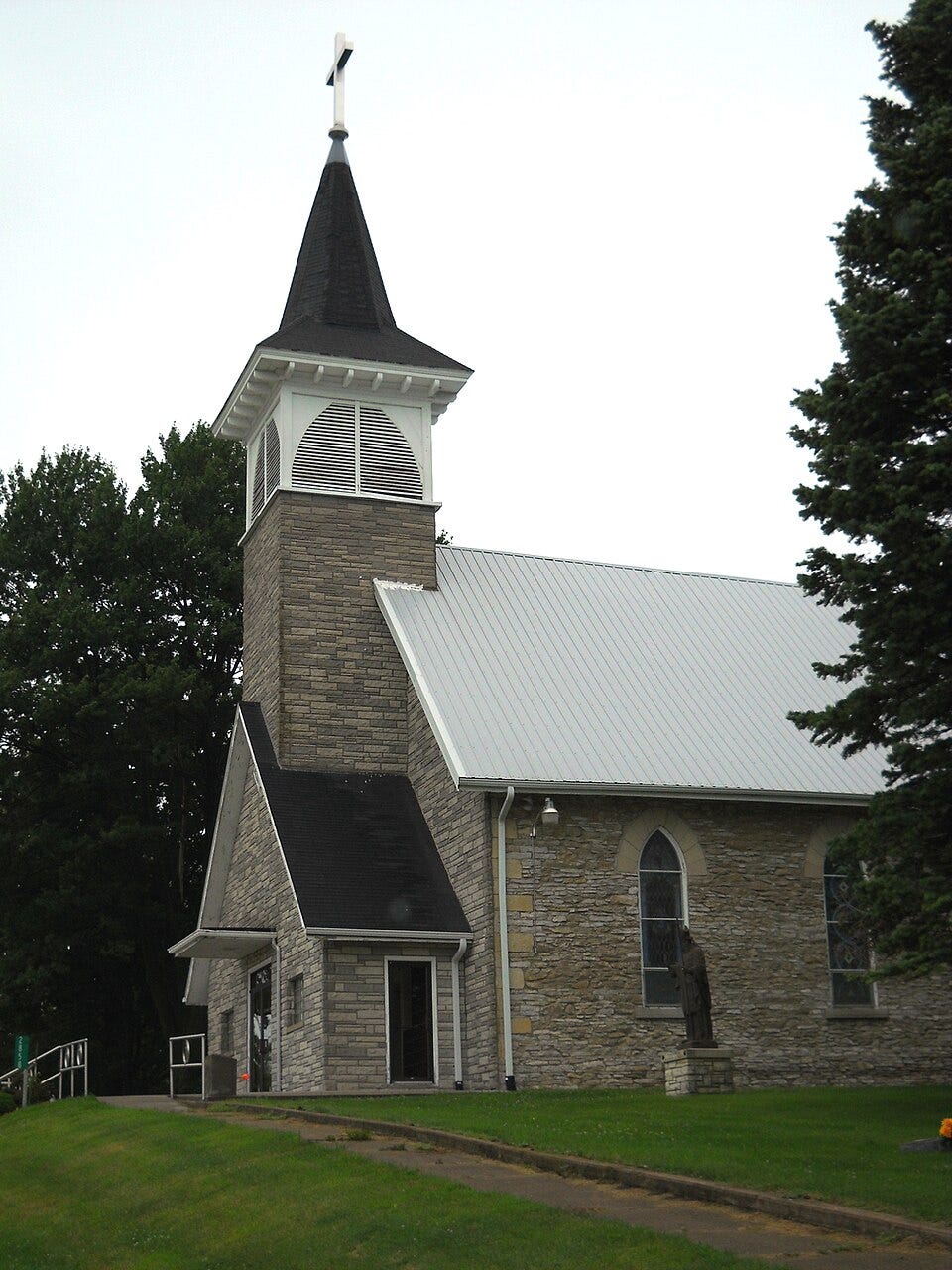
Despite the town’s size, its citizens maintained a robust social life rooted in an array of community institutions. The Rosary Society, the Altar Society, the Sodbusters 4-H club, and the Parish Council, which planned the summer picnic and Christmas play. These groups organized monthly meetings to plan outings, engage in light discussion or learning, and tend to community needs. The church may have been the beating heart of the town, but these organizations were its lifeblood.
Many other small towns had a similarly rich community life. Wes Jackson once reconstructed the routines and customs of one such organization in Matfield Green, Kansas, population 49 (Jackson, 2007):
In an upstairs bedroom, I came across a dusty but beautiful blue padded box labeled “Old Programs—New Century Club.” Most of the programs from 1923 to 1964 were there. Each listed the officers, the club flower (sweet pea), the club colors (pink and white), and the club motto (“Just Be Glad”). The programs for each year were gathered under one cover and nearly always dedicated to some local woman who was special in some way.
Each month the women were to comment on such subjects as canning, jokes, memory gems, a magazine article, guest poems, flower culture, misused words and birds. The May 1936 program was a debate: “Resolved that movies are detrimental to the young generation.” The August program was dedicated to coping with the heat. Roll call was “Hot Weather Drinks,” next came “Suggestions for Hot Weather Lunches,” and a Mrs. Rogler offered “Ways of Keeping Cool.”
These institutions were not just a mainstay of rural life. Cities had a bevy of groups one could join. The Masons (and the black-run Prince Hall Freemasons), the Knights of Columbus, the Order of the Eastern Star, the Jaycees, YMCAs and YWCAs, and of course the union hall. These groups, some rooted in religion, some in civic duty, and others in political power-building, all served as a central node for the flourishing social lives of turn-of-the-century cities. During the so-called Golden Age of Fraternalism, anywhere from 5-33%2 of Americans were members of over 800 such societies.
Columnist Timothy Carney refers to these organizations as Middle Institutions. These entities serve as mediators between the extremes of society: “they are middle, between the whole society and the individual. They are middle between the central government and the citizen” (Carney, 2019). Through an extensive network of lodges, chapters, and community centers, individuals could participate in collective action in a human-scale format. During the age of industrialization, mass immigration, and urbanization between the 1870s and 1920s, processes that were alienating for those leaving their homelands, fraternal orders were crucial in maintaining a sense of social cohesion among the nation’s citizens. The apotheosis of what Alexis de Tocqueville called America’s ‘art of association.’
The Americans make associations to give entertainments, to found establishments for education, to build inns, to construct churches, to diffuse books, to send missionaries to the antipodes; and in this manner they found hospitals, prisons, and schools. If it be proposed to advance some truth, or to foster some feeling by the encouragement of a great example, they form a society. Wherever, at the head of some new undertaking, you see the government in France, or a man of rank in England, in the United States you will be sure to find an association.
Aside from socializing and network building, association members often formed grassroots social safety nets to protect one another from a variety of vulnerabilities. Some organized insurance pools and funeral benefit funds; others established orphanages, hospitals, and eldercare facilities for members and their families. Oftentimes, these mutual aid systems were organized as an outgrowth of ethnic and class solidarity in the burgeoning immigrant neighborhoods of American cities. The Western Bohemian Fraternal Association organized life insurance for Czech and Slovak immigrants, funded by member dues (Shepherd, 2024). The Independent Order of St. Luke organized similar services among Black communities in the Jim Crow South. The United Farm Workers Union offered various forms of social insurance to members, inspired by historic Chicano and Chicana sociedades mutualistas, as well as administrative services to assist their Hispanic and Filipino members in filing English-language paperwork (Ganz, 2009).
Fraternal orders were also involved in political action. Black groups like the Prince Hall Masons collaborated among their members to finance civil rights court battles (including Brown v. Board of Education) and to publish Ida B. Wells’ investigations into lynchings across the South (Johnson, 2018; Gibson, 2020). This tradition of marrying social care and political action was later revived by the Panthers.


What’s valuable about how this mélange of groups was set up is just how integrated these functions were with one another, a quality that can seem very foreign in our atomized world. Socialization, community service, mutual aid, rituals, cultural activities, and political action all came from the same meetings, the same leaders, and the same lodges. The synthesis of these tangible and intangible activities under the same umbrella created a tightly woven community bond.
The deterioration of these integrated social institutions was the result of various historical forces unleashed by the Great Depression. Mass unemployment sapped membership rolls, as folks were less able to pay initiation fees and annual dues. Remaining members tended to be elders who required more medical care, stretching financial resources thin (Emery, 1994). Coinciding with this decline in membership, the federal government instituted both Unemployment Insurance and Social Security, alternatives to mutual benefit societies that were more comprehensive and financially stable during economic downturns. Additionally, during the Second World War, employers, due to wartime wage controls, began competing for labor by offering health and life insurance benefits, which further competed with the insurance offerings of fraternal societies.
These shifts made fraternal insurance programs redundant, and as these organizations began rebuilding their membership bases after the war, new leaders saw little need to restore legacy activities (Emery, 1994). Shedding these functions resulted in the Masons, the Elks, and the Woodsmen lodges of the 1950s drifting away from being centers for community care and embracing new roles as social clubs. Sure, chapters still volunteered at the local soup kitchen and maintained a scholarship fund, but their role in the lives of their members receded to mere middle-class fraternization.
Today, the unified function of the mutual benefit organization has been fractured into an assortment of domains. The state delivers mass social safety net programs (sometimes well, sometimes poorly), employers cover health insurance alongside occasional other benefits, and professionally run charities handle local gaps in coverage.
Some argue that this fragmentation of civil society — the splitting of care, social and recreational functions, and political engagement — is an underrated source of alienation. These entities played an important role as a mediating structure sitting between the individual and society at large. They allowed for participation in civil society with the human touch of mutual aid. A centralized social safety net, Carney contends, dismantled the social ties created by charity and replaced them with a faceless bureaucracy where alms seekers interact more with paperwork than their fellow humans.
Our more obvious and more immediate needs bring us together, and coming together fills the less obvious but still very real needs. We come together for food and drink or security and end up gaining from camaraderie. . . . The collapse of civil society has wreaked havoc on the needy and the working class, leaving families, communities, and politics in the disarray in which we find them. The tradeoff isn’t that the poor get fed at the cost of Aunt Gertude losing some volunteer opportunities. The tradeoff is that there is more money to ensure that the poor get fed, and yet less social infrastructure around which the poor and working class can raise intact families, find meaningful work, and access the good life.
In a pastoral guidance titled The Inclusion of the Poor in Society, Pope Francis advanced a similar notion. He asserts that charity needs to nourish both the intangible and material needs of the poor and to bring them into the fold of society, providing them with a seat at our tables (Francis, 2013). Alienating institutions of social support that lack an embodied physical experience fail to provide for this aspect of personal development, neglecting the dignity of the disadvantaged and impoverished.
Personalization also has implications for the success and durability of altruism. When distant bodies are responsible for the social safety net, it can be difficult for the taxpayer to experience a personal stake in the charitable enterprise, and the recipient lacks a human face to which they can show gratitude. Charity is reciprocal; exchanging an offering of bread and an expression of thanks is an essential component of the relationship. Bureaucratic, state-backed welfare lacks this element.
Political scientist Chris Gilbert documented that centralized state services in Venezuela’s boom years depleted citizens’ agency to act for themselves, and when the oil money dried up and public expenditures fell, many neighborhoods found themselves unequipped to perform essential functions, like waste management, themselves (Gilbert, 2023). Additionally, diffuse systems of social support are more resilient to authoritarian manipulations, as they are less able to be used as political footballs in Congressional budget fights.
Is this model worthy of revival?
The conditions that brought about the current framework of centralized social welfare do provide a convincing example of why centralization is beneficial, however. Charitable giving becomes less tenable as more of the population falls into poverty, like during the Great Depression. The deep pockets and even deeper lines of credit the state has access to ensure program solvency.
Furthermore, federal programs are subject to constitutional law (which is, for now at least, still worth something), protecting recipients from the kinds of discrimination that were present in the 1920s. Considering how many fraternal societies had implicit restrictions on race, ethnicity, religion, or gender, the universality of public social support programs makes society-wide reductions in poverty more possible. Carney cites the uniformity of government programs as a negative, as they aren’t as sensitive to local cultural conditions or specific needs, but in this case, uniformity is an unrivaled advantage.
Grassroots social safety nets are also vulnerable to onerous lifestyle regulation. Healthcare Sharing Ministries, an insurance alternative where members of a church agree to cover each other’s medical expenses, are rife with moralistic directives (Deam, 2019). They often ban members from smoking, restrict access to STD treatments and birth control, and deny treatment for preexisting conditions. These forms of lifestyle regulations pepper the history of fraternal societies and are a weakness of these sorts of voluntary associations.
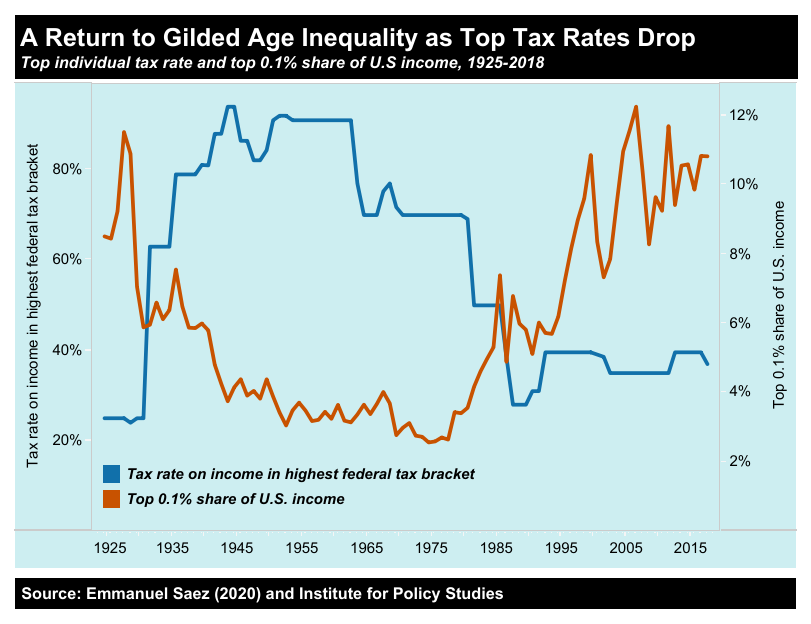
Centralization also makes wealth redistribution between classes feasible. Fraternal societies were often made up of economically similar individuals. The Masons, for example, consisted of middle-and upper-middle-class business owners, tradesmen, or professionals. The Knights of Pythias and many ethnic associations, meanwhile, had a more working-class member base, and their accounts reflected that fact. Fraternal societies were functionally organized as people within the same classes supporting one another with what wealth was accessible to them. These were institutions of immediate financial security and were ill-equipped to pursue cross-class equality. Centralized welfare programs, by contrast, are capable of redistributing wealth towards the working classes by taxing the rich. And after the Second World War, that’s exactly what happened. The golden age of the American middle class was the result of this massive redistribution made possible by the state.
I’m also somewhat suspicious of returning to the distributed model of social support because, frankly, a lot of terrible people with a lot of terrible beliefs support doing so. A Heritage Foundation report lauds the re-mobilization of churches as the center of the social safety net, citing fraternal history as a justification, and advocates privatizing public schools, seeing charter schools as more ‘community-oriented’ despite their less democratic governance and more restrictive admissions practices (Amselem, 2013). Congressional republicans have endorsed curtailing the social safety net and pushing these functions to private charity as well (King et al., 2019). Even one of the people I’ve been citing, Timothy Carney, is a fellow of the anti-welfare American Enterprise Institute. This rich history of class solidarity is unfortunately being used as a plank in the project of demolishing the social safety net by a movement that has no plan to establish a similarly funded, secular replacement.
Additionally, the over-integration of different social functions into one organization has its own resilience concerns. In Maoist China, one’s work unit (dānwèi) was structured to be the center of daily life. “People were born in the danwei clinic, went to danwei-sponsored schools, worked in danwei upon graduation, found partners through danwei-organized dates, and moved into danwei-sponsored dorms or housing,” wrote policy analyst Zilan Qian. But when economic liberalization came in the 1990s and the Northeast experienced a decline akin to America’s rust belt, not only did people lose their jobs, but their source of social security and sense of community unraveled along with their loss of employment (Qian, 2026).
By consolidating all of their tangible and intangible forms of support into one institution, that institution became a central point of failure. Having one’s material security and social identity bottomed out in one fell swoop is one of the most disorienting experiences I can imagine. This is the same issue with tying health care to employment in the U.S. This downside of integrating the social safety net with other functions calls into question the project of restoring fraternal aid societies. Clearly, it is a bad idea to have our material safety tied up with our employment relationships. Why wouldn’t similar vulnerabilities be present if our neighbors or friends held that same authority?
Ultimately, I’m not convinced that the decentralization of the welfare state back to local associations is the solution here, but this history could inform the design of new futures for collective care.
Carney suggests a variety of ‘small solutions,’ recognizing that cultivating a robust civil society requires an assortment of organic actions across geographies and communities. However, many of his solutions strike me as ineffective. He lauds the Nordic model of union labor, which, in addition to collective bargaining, involves unions operating the unemployment insurance and job retraining programs instead of the government. Carney proposes reforming American labor policy around this framework, claiming progressives will like it since it gives workers a greater reason to join unions, and conservatives will like it because it privatizes unemployment insurance. I think this misunderstands why the right dislikes unions — they’re opposed to working-class power. He also states that the government should “get out of the way” of churches so they can focus on rebuilding civil society, which is fundamentally out of touch with reality.
However, I think he has some creative ideas regarding the decentralization of social support programs. He promotes reconceptualizing the role of the federal government in directing charitable programs: program delivery should be pushed to the most local context possible so recipients can reconnect with their local communities (a concept called subsidiarity), with the feds becoming a “safety net for safety nets.” Of course, some could argue that has long been Washington’s role, given the billions of dollars granted to local nonprofits up until the DOGE shock and the fact that programs like Medicaid and Unemployment Insurance are already state-run. Plus, the defederalization and block-granting of welfare programs have historically led to collapses in funding, leaving beneficiaries deprived (Kogan et al., 2025). But there is something to the idea of localization of the social state that could be a useful springboard to reinvigorate the missing middle.
One approach would be the municipalization of the delivery of certain social services, with funds still flowing from Washington. City governments are subject to the same constitutional duties as the federal government while possessing more human-scale bureaucracies. SNAP, for example, could be reformed to allow cities to establish public cafeterias similar to Polish Milk Bars that serve affordable, hot meals to both SNAP recipients and members of the public. If meals are sold at the same cost and quality as an upper-tier school meal (~$5), these could become gathering spaces where multiple segments of society can commune over decent food in a public space. Food hubs, public grocers, mini farmers’ markets, or other services could be set up alongside these establishments as well. Given that the poor are impoverished in terms of time as well as money, such establishments would represent both a monumental improvement to the poor’s quality of life and a valuable complement to SNAP’s cash assistance.
Beyond Third Spaces
The ultimate goal here is to recouple social connection and social aid and stimulate active participation in civic and community matters. To create spaces and organizations that can serve to mediate between the individual and society at large.
Even with the weaknesses of a state-delivered social safety net, its potential to be a vehicle of redistribution even during economic downturns, I believe justifies its continuation as a core strategy for poverty reduction. Thus, for a project of rebuilding associations of civil society, a framework of providing amenities that go beyond the welfare state strikes me as the optimal path forward.
The social safety net is currently built around various forms of cash assistance, but lacks any real ability to deliver service-based forms of mutual aid. Filling this gap offers would-be builders of civil society a lucrative opportunity. One could imagine a sort of community cooperative that incorporates mutual childcare, paperwork help nights, various types of peer support circles,3 volunteer squads that install accommodations in disabled members’ homes, home help for ill members, and other similar services. Crucially, these should integrate some sort of active civic engagement and deliberation and should include some sort of ritualistic element. Annual festivals marking some sort of community observance, initiation ceremonies, and formal celebration of member milestones. Rituals to bond people to the organization and one another. The key to imagining these futures lies in looking at where centralized altruism fails and filling those niches. Overwhelmingly, these niches involve providing labor for those who lack time or ability.
Rebuilding civil society will come from a host of efforts across many domains in every city, town, and neighborhood in the country. The Golden Age of Fraternalism is instructive, but it’s not a blueprint. It shows us that integrating care with socialization, identity, and even ritual is a reliable foundation for creating fellowship among strangers. The task for our future is to determine how these ingredients fit together for the next generation of American Associations.
What I’m Reading, Watching, and Listening to
The Restaurant of Lost Recipes: A cozy book about a detective agency that recovers meaningful recipes from their client’s pasts. A little repetitive narratively, but a very sweet set of stories.
America Already Built the World’s Largest Science-Vetting Machine: American scientific agencies spend thousands of hours and millions of dollars reviewing and scoring research proposals that never get funded. This initiative encourages setting up a system to share those assessments, with investigator approval, with private funders who can put that unused labor to work and fund more science.
References
Adams, T., D. Crawford, G. Dolan, D. Knott, I. Nienhaus, et al. 2005. Monti Memories.
Amselem, M.C. 2013. Rebuilding Social Capital Through Community Institutions. The Heritage Foundation. https://www.heritage.org/poverty-and-inequality/report/rebuilding-social-capital-through-community-institutions (accessed 29 June 2026).
Carney, T.P. 2019. Alienated America: Why Some Places Thrive While Others Collapse. 1st ed. HarperCollins Publishers, Erscheinungsort nicht ermittelbar.
Deam, J. 2019. Buyer beware: When religion, politics, health care and money collide. Houston Chronicle.
Emery, H. 1994. The Rise and Fall of Fraternal Methods of Social Insurance: A Case Study of the Independent Order of Oddfellows of British Columbia Sickness Insurance, 1874-1951. Business and Economic History
Francis. 2013. Evangelii Gaudium. https://www.vatican.va/content/francesco/en/apost_exhortations/documents/papa-francesco_esortazione-ap_20131124_evangelii-gaudium.html.
Ganz, M. 2009. Why David Sometimes Wins: Leadership, Organization, and Strategy in the California Farm Worker Movement. Oxford University Press.
Gibson, L. 2020. America’s Oldest Civil Rights Organization – The Prince Hall Masons. AFRO American Newspapers. https://afro.com/americas-oldest-civil-rights-organization-the-prince-hall-masons/ (accessed 16 June 2026).
Gilbert, C. 2023. Commune or Nothing! NYU Press.
Jackson, W. 2007. Economics and the Enigma of Eden. The Land Report 89(Fall): 18–24.
Johnson, V.M. 2018. “The Half Has Never Been Told”: Maritcha Lyons’ Community, Black Women Educators, the Woman’s Loyal Union, and “the Color Line” in Progressive Era Brooklyn and New York. Journal of Urban History 44(5): 835–861. doi: 10.1177/0096144217692931.
King, W., V. Menon, and R. Bellafiore. 2019. The Space Between: Renewing the American Tradition of Civil Society. Joint Economic Committee Republicans.
Kogan, R., J. Cureton, and D. Reich. 2025. History Shows That Block-Granting Low-Income Programs Leads to Large Funding Declines Over Time. Center on Budget and Policy Priorities.
Qian, Z. 2026. Boarding China’s Last Bus. Asterick.
Shepherd, S. 2024. Reciprocal Aid: Fraternalism and Early Social Welfare History. Social Welfare History Project. https://socialwelfare.library.vcu.edu/organizations/reciprocal-aid-fraternalism-and-early-social-welfare-history/ (accessed 16 June 2026).
The church became the responsibility of Ryan, a neighboring parish. Their priest would say a weekly mass at Monti and tend to their affairs along with his home church. In due time, Ryan would also lose their permanent priest, joining in with several parishes to be bound in a “cluster” of 4 churches based in Manchester, the county seat. Today, mass is said weekly in Manchester, with the other three churches receiving a mass every third Sunday on a rotating basis. This consolidation meant Monti lost its weekly mass.
Sources simply cannot agree.
In the vein of AA, grieving circles, etc.