

What is Agroecology?
Dissecting a discipline, a movement, and a practice

Agroecology is often described as simultaneously a movement, a method of production, and a scientific discipline. The Food and Agriculture Organization maintains this definition, as does its Wikipedia article. Agroecology is a flexible discipline that can be applied to scientists, activists, and farmers.
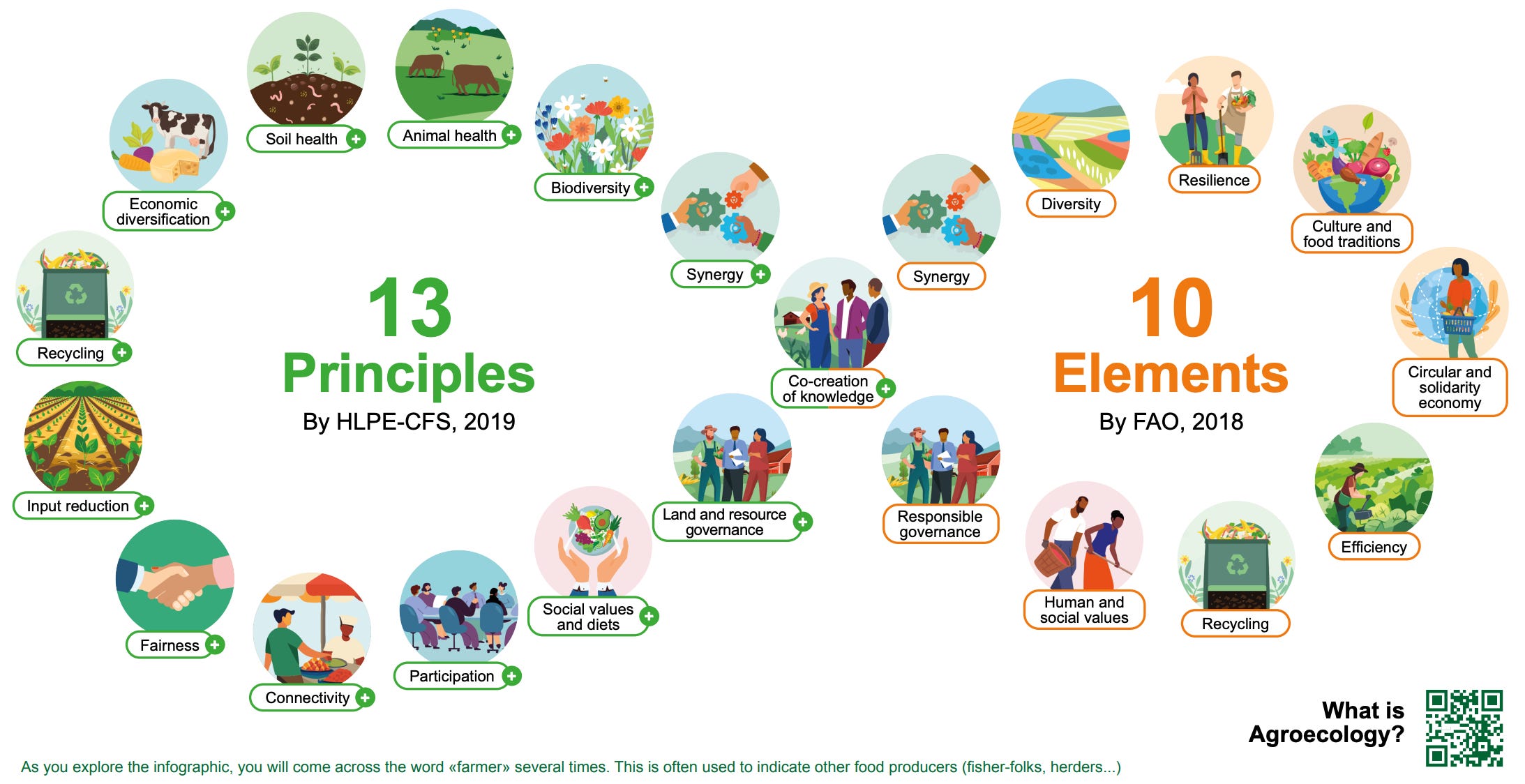
Needless to say, this is an odd situation. It’s difficult to think of scientific disciplines that also flow so seamlessly into civil society or popular practice. Social movements often draw from research, and researchers often engage with practitioners, but these groups don’t tend to directly affiliate with one another. There’s normally more of a separation between these domains in both terminology and interactions. But in agroecology, there is an ample flow of concepts and frameworks between these three groups, which is fairly unprecedented.
Given the importance of agroecology in underpinning a number of scientific, social, and practical advances and its potential to address various environmental and social crises, I wanted to explore the history of this arrangement to understand how it came about and to better define the landscape of this unconventional arrangement.
Origin in the Academy
The concept of agroecology, at least as a term, originates squarely as a scientific marriage between agronomy and ecology. It was coined by Dr. Basil Benzin, an agronomist of Russian extraction, to explore how ecological concepts could be utilized to improve crop production (Wezel et al., 2011). This idea (and name) was further developed by German zoologist Wolfgang Tischler, who sought to explore how the wider environment, namely climate and geology, influences the production of crops and livestock and interacts with farm management decisions (Tischler, 1965). A lot of early work in the field centered on the utilization of biologically based tools to manage pests and the effect climate has on plant and animal physiology (this latter aspect was brought on by American K. H. W. Klages, another important early figure).
Agroecology began primarily as an extension of ecology and was being developed alongside other new branches in the field, including community and evolutionary ecology (Egerton, 2024). As the 1970s dawned, agroecology began to mature into a discipline in its own right. Much of the early work in this era focused on identifying a foundational ethos and formalizing methodological approaches to evaluate farm sustainability (Mason et al., 2021). Specifically, the lenses that researchers would focus on were being established, with one foundational text emphasizing “mineral cycles, energy transformations, biological processes and socio-economic relationships,” (Altieri, 1983). Biological pest management continued to be developed, and the field began emphasizing the importance of biodiversity in achieving more ecologically sound farms. In short, as a response to the global intensification of agriculture, agroecology shifted from understanding how ecosystems interact with farms to instead focus on providing scientifically validated alternatives to the energy and input-intensive farming methods that were proliferating globally.
This is also the era in which social and political issues came to the forefront, showcasing how early such considerations have been included in agroecology research (Mason et al., 2021). This coincided with more attention being paid to assessing the ecology of the global food system as a whole, changing the scale of consideration from farm fields to encompass the ecological effects of distribution and consumption as well (Wezel et al., 2011).
The next era, which began in 2005, saw a newfound focus on ecosystem services as the primary lens of analysis. This framework attempted to assess organisms and habitats based on the services they perform for both humans and the wider environment, including regulating climate, air, and soil, as well as provisioning water and food. This era also sees an increasing interest in a concept called ecological intensification, which focuses on driving yield growth by using environmental processes (such as nutrient cycling or biological pest management). Finally, this period emphasized a strong interest in the tropics, a focus that Mason (2021) argues was due to declining coffee prices spiking poverty among smallholders around the equator. Much of the interest in this research centered around providing tropical farmers with more diverse alternatives to the industrial monocultures that were seen to have led to the crisis.
The final era, which kicked off in 2014 and still largely defines the field, brought social issues to the center. The priorities of this era emphasize food sovereignty and security, at what scales we should study and practice agroecology, how to transition to a more ecologically sound system of production, and debates over specific approaches (e.g., land sparing vs. sharing, the degree to which conventional chemical-based practices can be compatible with agroecology) (Mason et al., 2021). Circa 2010 is also when literature in agroecology exploded, with Mason (2021) dubbing this the “exponential growth” period.
Across this timeframe, each phase of agroecology research showed a strong sense of internal criticism, with scholars continually debating the social role of the field and reflecting on the impact their research was having in the world (Mason et al., 2021).
From the 1970s onward, agroecology research has been defined by a co-existence of the biophysical and social sciences within one field. It is a discipline with a strong sense of direction and an action-orientation, seeking to scientifically validate and improve sustainable alternatives to conventional agriculture while improving the social, economic, and political conditions for the people whose livelihoods rely on the land. These qualities are what laid the groundwork for agroecology to break out of the academy and take root in the fields and minds of the public.
Emerging movement and Production methodology
The first inklings of agroecology as a significant force outside of the academy took place in Latin America. In an attempt to prevent the expansion of chemically dependent farming models, agroecologists began taking a more on-the-ground approach, promoting region-specific sets of practices informed by their research to peasant and smallholder farmers (Altieri and Toledo, 2011). In the Andes, for example, altitude-based crop rotations, terraces, and irrigation systems were designed to stem erosion while supporting adequate yields of culturally appropriate foods.
In many regions, these efforts were led by peasants, drawing from or restoring traditional farming systems indigenous to the region. This model of food, technological, and energy sovereignty still serves as a central guide stone to agroecology practices globally, emphasizing how production methods can integrate social and political concerns alongside productivity and sustainability.
This general approach eventually crystallized into a framework synthesizing a place-based production method based on the environmental and social needs of a specific area, as opposed to promoting a single production method. That’s why I prefer terms like production methodology or framework over defining this aspect of agroecology as a ‘set of practices.’ As a practical approach, agroecology doesn’t try to establish universal rules of production like those promoted in the organic or regenerative movements.1 Instead, it is a process-based approach that seeks to develop agricultures that serve multiple functions – food production, political and social resilience and independence, and ecological harmony – and centers ecological processes to achieve these goals (Brym and Reeve, 2016).
This evolving framework gelled well with environmental, peasant, and rural development movements in the Global North and South. In the North, the burgeoning environmental movement, spawned by Rachel Carson’s Silent Spring and focused on eliminating toxic compounds from the environment, saw agroecology as a useful framework within which to develop alternatives to synthetic pesticides and fertilizers, with farmers and scientists experimenting with new methods in their own respective ways. In the South, agroecology became tightly attached to peasant movements fighting land dispossession and dependence on corporate chemical agriculture. Thus, agroecology made the jump from an academic field/agronomic niche to becoming a fully-fledged social movement.
These interrelations played out differently depending on the country. In the United States, for instance, agroecology began squarely as a scientific discipline but over time took on new meanings as a method and movement. In Brazil, agroecology was introduced as a social movement from other parts of the Americas and eventually developed into a scientific discipline. And finally, in Germany, agroecology has only ever been seen as a scientific discipline, as farmers and activists never really latched onto the term as an identifier (Wezel et al., 2011).
While this co-evolution between scientists, activists, and farmers has proven advantageous for cross communication and movement effectiveness, the close relationships between these three groups certainly raise some concerns regarding scientific integrity. From Wezel (2011)
“A key-point here for the scientists is to assess how these tight connections may influence the science of agroecology, where there will be application to meet a political vision using a set of technological practices. This association raises serious questions for some who have seen science more as an objective activity that is somewhat disconnected from practice. For example, when the science agroecology is defined as the scientific basis of a sustainable development strategy which emphasises food sovereignty, conservation of natural resources and agrobiodiversity and empowers rural social movements, the science itself may appear as an advocacy activity that will be impacted by diverse goals and applications of results.”
The ability of science to answer the important questions of the day is rooted in our pursuit of the lofty enlightenment goals of empiricism and perceived objectivity. Even if the perfect execution of these ideals is impossible, I believe science functions best when our institutions and ethos are at least in pursuit of those goals. Engaging with social and political movements, while necessary for both science and society to thrive, must be done incredibly carefully.
Of course, agricultural science has a long tradition of turning science into practice through extension. While there are valid concerns about political motivations muddling scientific output, to me, worldview doesn’t seem to define the quality of the science that comes out of agroecology, but the priorities. When the discipline was emerging in the United States and Latin America, alongside the environmental and peasant movements, many early scientists saw themselves as working to validate and improve sustainable practices and make farmers more resilient to economic and political influences. This is an environment where science can remain robust while remaining socially informed and effective.
Brym and Reeve (2016) propose a framework I quite like. They conceptualize agroecology as two tracks: research and activism. These groups share a foundational set of principles (biodiversity, systems approach, sovereignty) and work towards the same general goals (a productive, sustainable, and just food system), informing one another along the way.
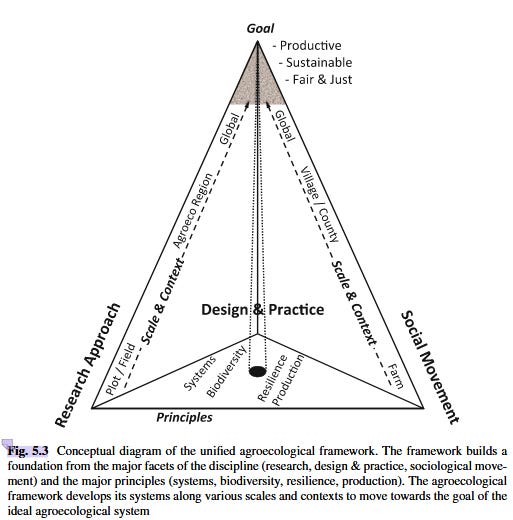
I think this is a very effective way to join social and scientific movements together, allowing for cross-collaboration while maintaining strong boundaries. It also helps to make agroecology adaptive and context-dependent, as no one group has a monopoly on the term or movement. There are no rigid definitions or standards to adhere to, just what brings about effective outcomes. This is what makes agroecology both a practical framework for bringing about a sustainable agriculture transition as well as an effective line for advancing radical social and political goals. While I have concerns that some researchers may let their ideological, partisan, or even aesthetic preferences cloud their scientific judgment, especially when it comes to policy recommendations, the field as a whole seems relatively resistant to compromised integrity. I’ve seen rigorous consideration of tradeoffs and engagement with ideas that other strains of sustainable agriculture research flatly reject, such as the role of synthetic fertilizer or how to approach intensification (Uphoff and Thakur, 2019; Falconnier et al., 2023).
When ecology as a field was founded, its primary innovation was it approached the environment as a cohesive whole that required an understanding of the interactions between every constituent part. It recognized that plants, animals, minerals, and the climate all affect one another, a novel concept for Western Europeans.
Agroecology is built on top of this integrative tradition by recognizing that, in human-centric ecosystems, social dynamics, economics, and politics are just as important as climate or soil. Farms are deeply connected to their community’s health and wellbeing, and those components must be considered alongside the biophysical. As pioneering agricultural economist John Ikerd wrote “Agroecology requires ways of thinking that are fundamentally different from the specialization, standardization/mechanization, and consolidation mindset of industrial agriculture,” (Ikerd, 2018). He continues, “Agroecology views humans as members of the earth’s integrally connected ecosystem. The farmer is treated as a member of a farm’s agroecosystem and the relationship between a specific farm and specific farmer is critical to the farm’s success or failure.”
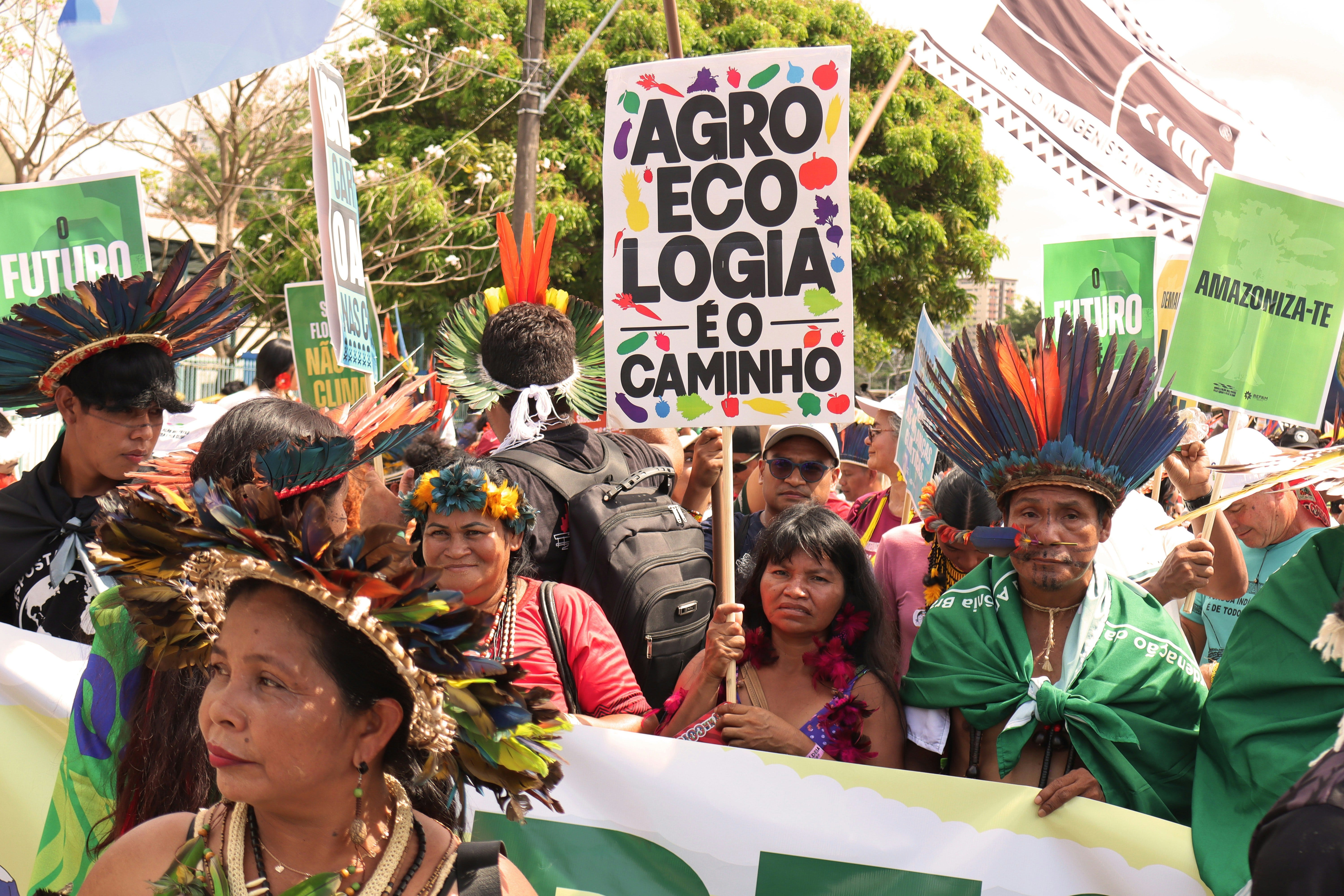
Overall, agroecology offers a socially conscious and emphatically practical approach to solving the agricultural challenges of the day. It resists solutionism, both technological and natural, in favor of human ingenuity and autonomy. It marries the strident prioritization of sustainability, both human and natural, with the understanding that agriculture requires real tradeoffs, and that compromises and accommodations may be needed somewhere. Agroecology does not categorically reject a new technology. It simply demands that technology work for the farmer and the land. Likewise, it does not dismiss real social or environmental concerns. By uniting movement, science, and practice, agroecology offers a just, yet productive, vision for the future.
What I’m Reading, Watching, and Listening to
Fran Sans: Follow the creation of a new font based on the the Bay Area’s light rail destination signs.
The Cloud Report: An adorable little zine documenting the observations of a Vermont crossing guard.
Rethinking High-School Science Fairs: Some really interesting ideas to make science fairs less competitive and more playful, boosting interest in the curiosity and exploration that science is really about.
The Yiddish Policemen’s Union: An imaginative detective story set in the alternate history world of the Sitka Jewish Refugee district in Alaska. I adore the abundant witty one liners that pervade this book.
References
Altieri, M. 1983. Agroecology: the scientific basis of alternative agriculture. University of California Press, Berkeley.
Altieri, M.A., and V.M. Toledo. 2011. The agroecological revolution in Latin America: rescuing nature, ensuring food sovereignty and empowering peasants. Journal of Peasant Studies 38(3): 587–612. doi: 10.1080/03066150.2011.582947.
Brym, Z.T., and J.R. Reeve. 2016. Agroecological Principles from a Bibliographic Analysis of the Term Agroecology. In: Lichtfouse, E., editor, Sustainable Agriculture Reviews. Springer International Publishing, Cham. p. 203–231
Egerton, F. 2024. Ecology in history. EBSCO.
Falconnier, G.N., R. Cardinael, M. Corbeels, F. Baudron, P. Chivenge, et al. 2023. The input reduction principle of agroecology is wrong when it comes to mineral fertilizer use in sub-Saharan Africa. Outlook Agric 52(3): 311–326. doi: 10.1177/00307270231199795.
Ikerd, J. 2018. Agroecology: Science, Farming System, or Social Movement? University of Missouri Faculty. https://ikerdj.mufaculty.umsystem.edu/presentation-papers/sustainable-farming/agroecology-science-farming-system-or-social-movement (accessed 23 December 2025).
Mason, R.E., A. White, G. Bucini, J. Anderzén, V.E. Méndez, et al. 2021. The evolving landscape of agroecological research. Agroecology and Sustainable Food Systems 45(4): 551–591. doi: 10.1080/21683565.2020.1845275.
Tischler, W. 1965. Agrarökologie. Gustav Fischer Verlag Jena.
Uphoff, N., and A.K. Thakur. 2019. An Agroecological Strategy for Adapting to Climate Change: The System of Rice Intensification (SRI). In: Sarkar, A., Sensarma, S.R., and vanLoon, G.W., editors, Sustainable Solutions for Food Security : Combating Climate Change by Adaptation. Springer International Publishing, Cham. p. 229–254
Wezel, A., S. Bellon, T. Doré, C. Francis, D. Vallod, et al. 2011. Agroecology as a Science, a Movement and a Practice. In: Lichtfouse, E., Hamelin, M., Navarrete, M., and Debaeke, P., editors, Sustainable Agriculture Volume 2. Springer Netherlands, Dordrecht. p. 27–43
Obviously, I’m oversimplifying, but both the regenerative and organic movements are historically more friendly to top-down theories of change, namely through certification standards. Hence my characterization.
Excellent piece! As a degrowther activist type I have always appreciated the melding of the practical with the scientific that we get to see in the world of agroecology. Feels like a fitting field for it to occur in, knowing the language that activists often use of creating an ecosystem of projects, orgs, collectives, and other players. The scientific body, social movements, activist groups, land projects, reservations, etc. all play our own role as organisms in the degrowth ecosystem! It wouldn't be very ecologically-grounded of us to not interplay well, if you ask me!